Embroidery as a secular art and domestic activity began in 17th cen. Europe, primarily in England.
Previously, it had been limited to ecclesiastical and courtly attire.
It became a popular hobby for women of all social classes in the 18th cen.
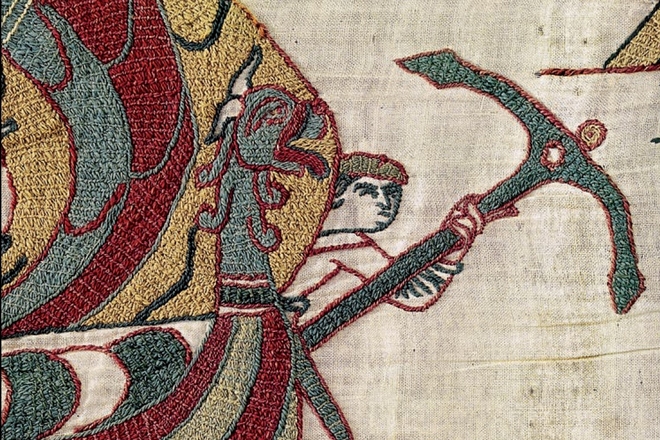
An early example
The Bayeux Tapestry
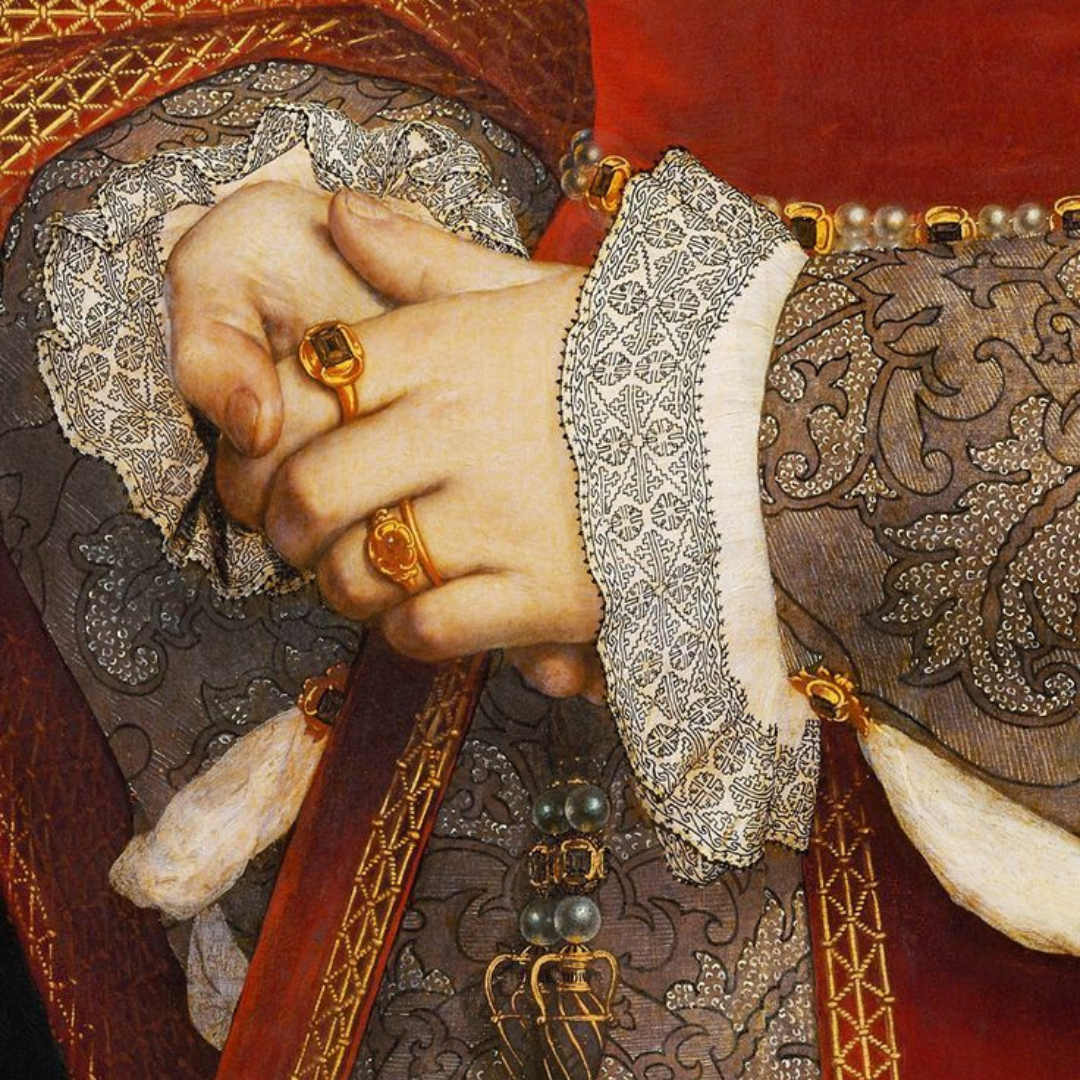
Noble attire
Tudor blackwork embroidery
A set down
Dr. Sloper: A hundred women are prettier, a thousand more clever, but you have one virtue that outshines them all.
Catherine: What, what is that?
Dr. Sloper: Your money!
Catherine: Father!
Dr. Sloper: You have nothing else.
Catherine: Oh, what a terrible thing to say to me.
Dr. Sloper: I don’t expect you to believe that. I’ve known you all my life, and I’ve yet to see you learn anything. With one exception, my dear. You embroider neatly.
A domestic art
Embroidery was for a very long time a set of practices that oppressed women. But you can find examples in almost every culture of women who found in embroidery itself, a way of subverting that oppression. Who found a way of escape, of creating, of protesting, a way of sharing, of collectively creating, of even having an economic advantage through embroidery.
A metaphor for human connectivity
Loaded with gender connotations and power hierarchies, fiber and textile traditions [… ] provide a fitting platform for examining tastes, roles, and relationships socialized within and around gay and lesbian culture. And thread—be it yarn or embroidery floss—parallels the potential for connectivity in our lives as same-gender-loving and gender-non-conforming peoples. Our commonalities may be as thick as a knot or as thin as a string. As individuals, we are strands; as communities we are interwoven. Both can be broken or braided.
A site of resistance
I wanted to stab someone 8000 times. Instead, I cross-stitched an ancient design.
Textile Arts and Political Activism
A few examples, past and present.
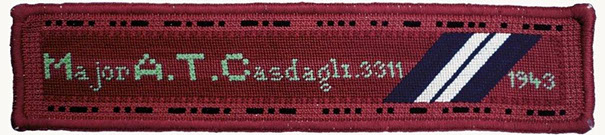
Major Casdagli in WWII
Alexis Casadagli’s work
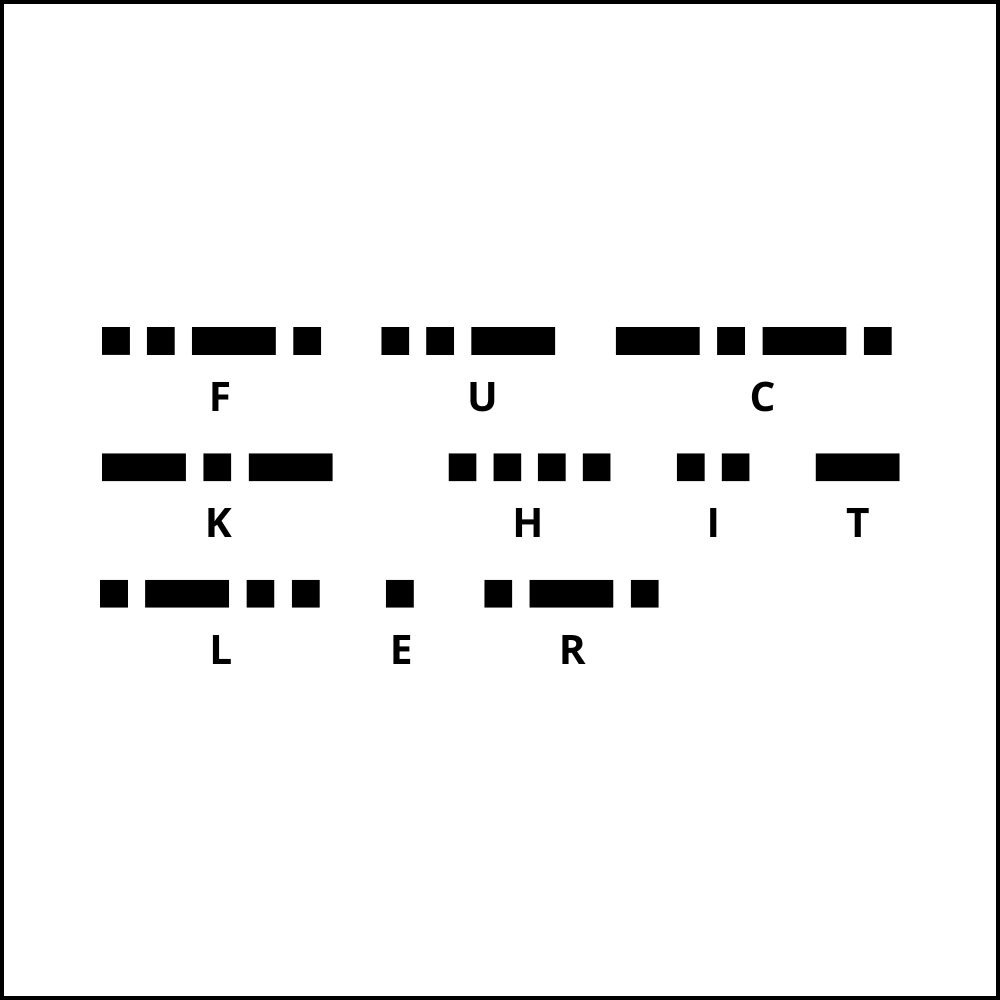
Morse code
Steganography
The word ‘steganography’ refers to the act of concealing secret information within something public, in order to avoid detection. In other words, hiding something in plain sight.
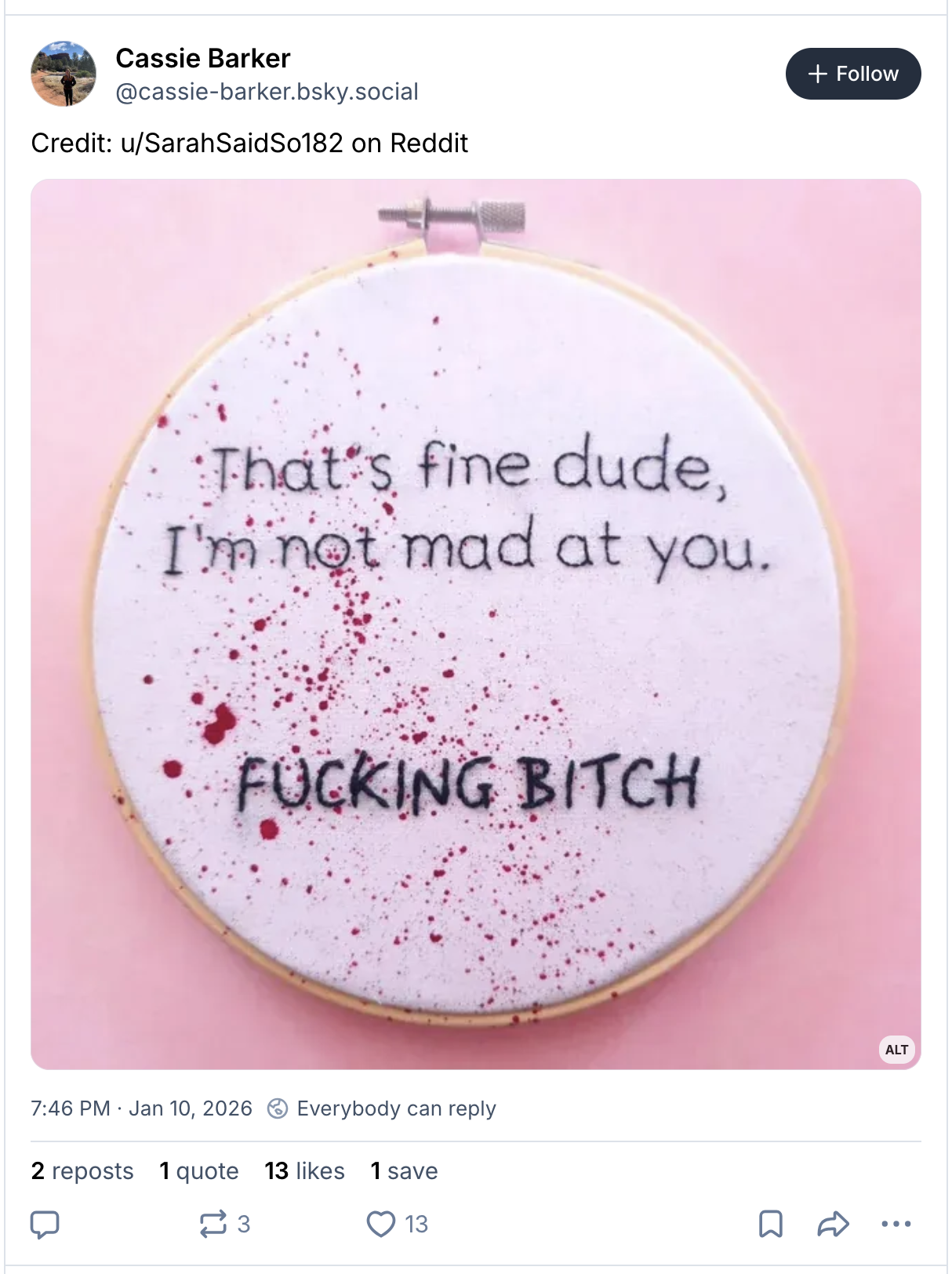
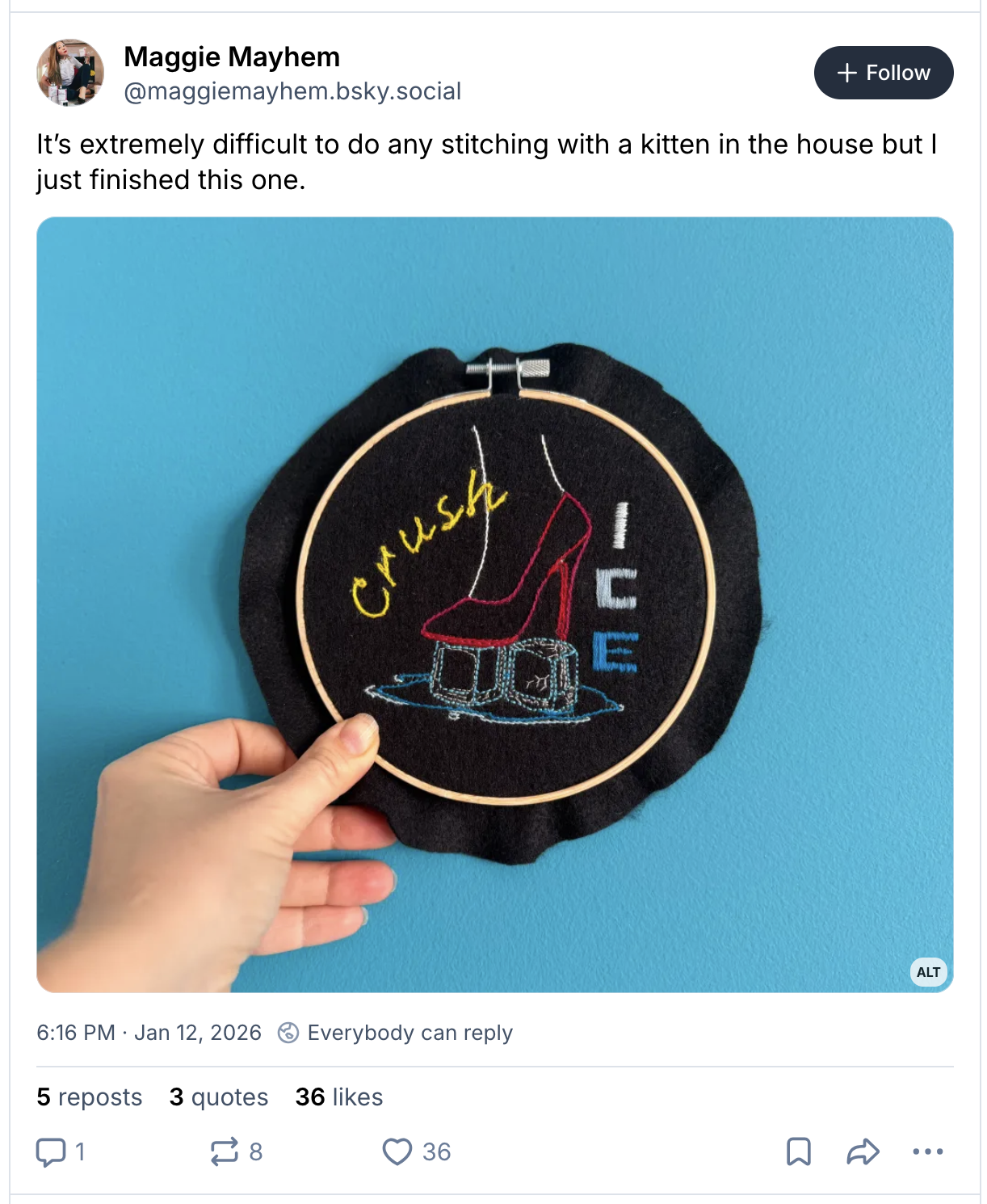
Minneapolis 2026
Sarahsaidso182 on Reddit
Maggie Mayhem
What can be data in textiles?
Anything you care about, really. A few ideas:
Data from wearables
The scansion of a favorite poem
The plants in your yard
The character and quantity of your laughter (see Dear Data for more fun examples)
Symbols as data
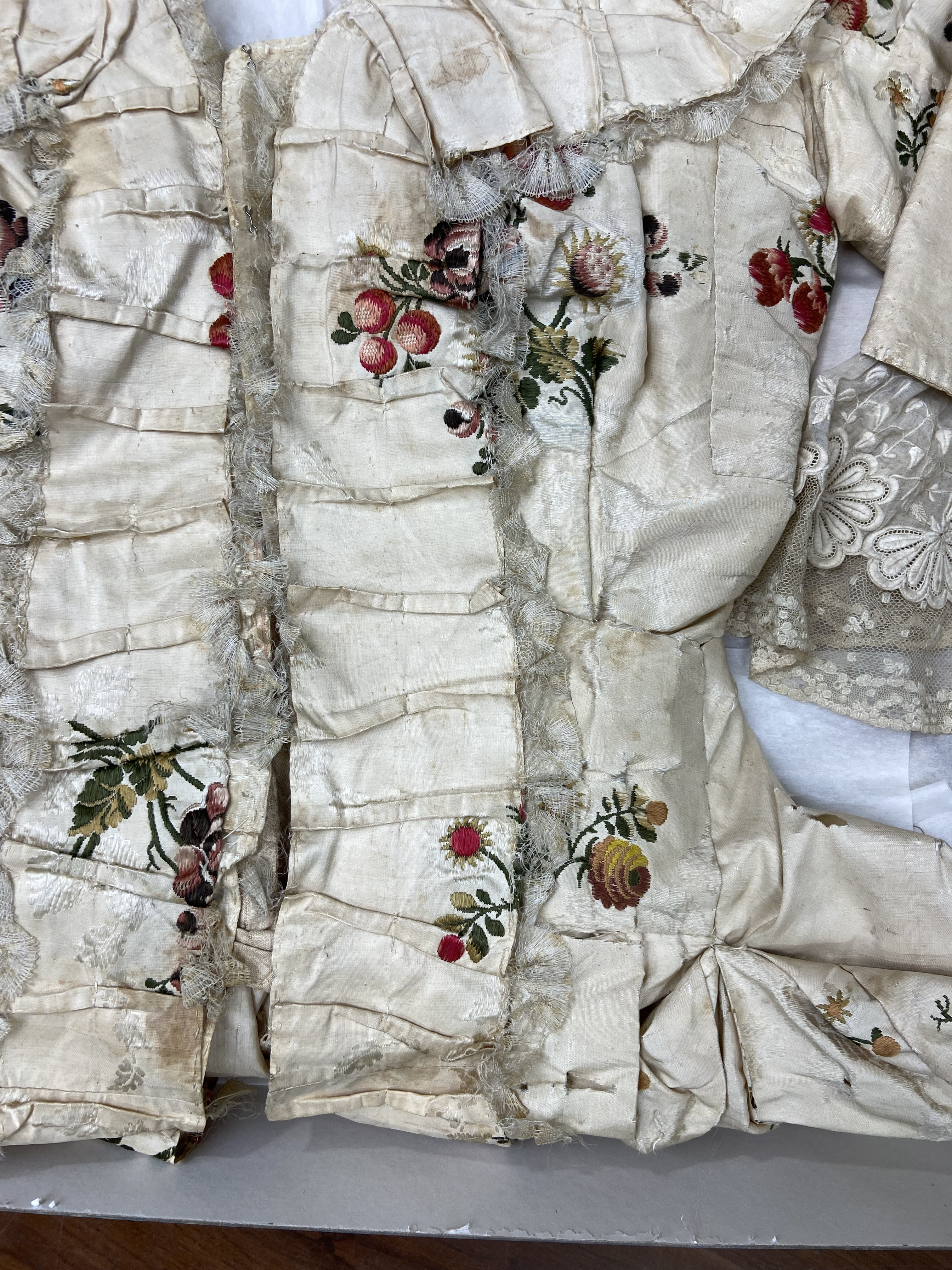
Dina Van Bergh’s wedding dress, SCUA
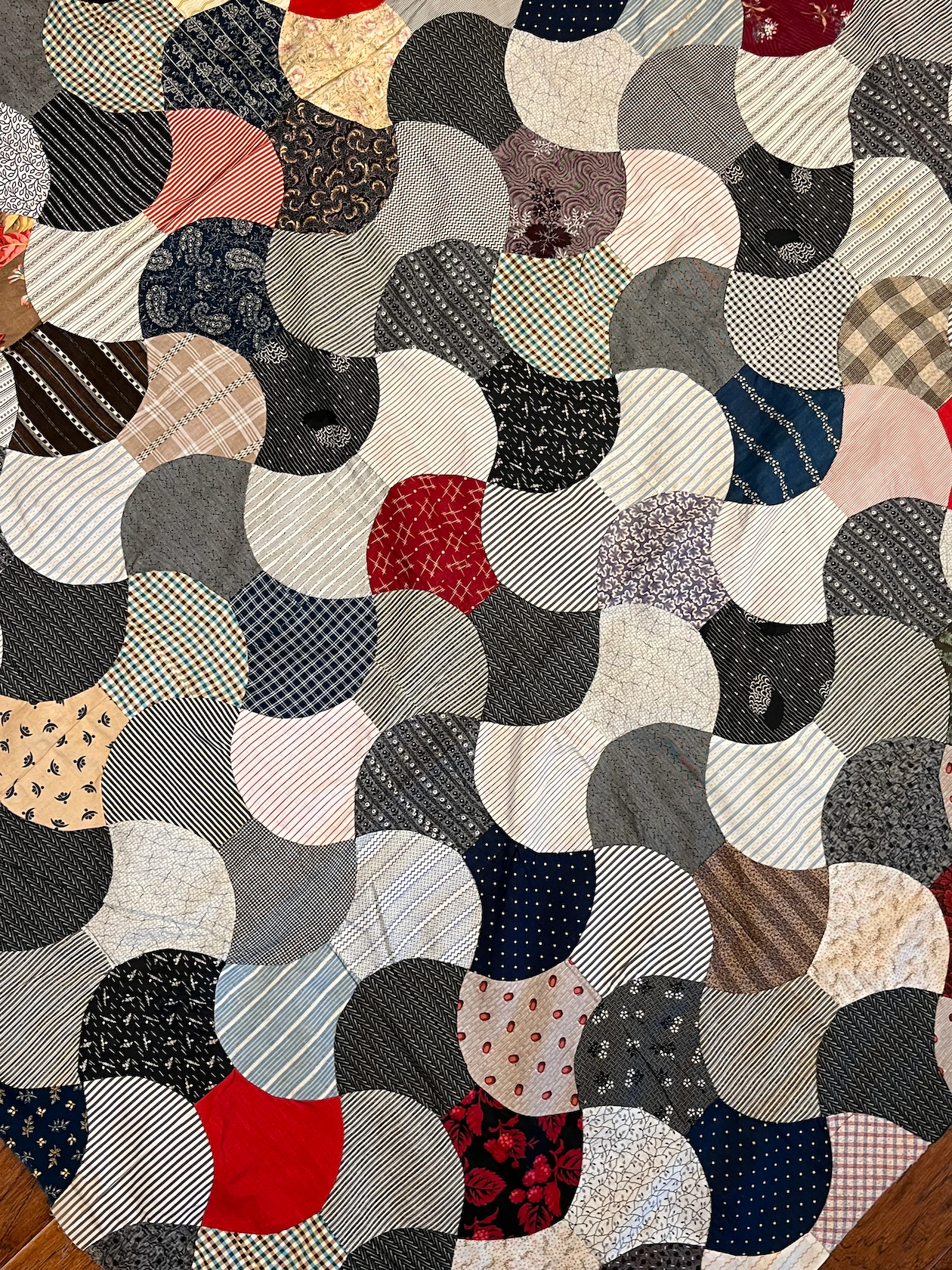
Quilt patterns (or myths about them) as data
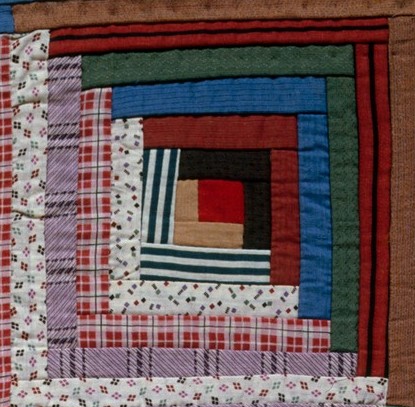
“Isn’t it true that Log Cabin quilts with black centers were hung on the clothesline during the days of slavery to alert escaping slaves to the presence of a ‘safe house’?”
“Were quilts read as maps to tell escaping slaves the route to safety?”
“Is a pattern known as”Friendship” or “Mother’s Oddity” a secret code for Lesbianism?”
Log Cabin Pattern
detail
Double Ax (Mother’s Oddity)
Double Ax Head quilt, ca. 1890s
Embroidered data: some examples
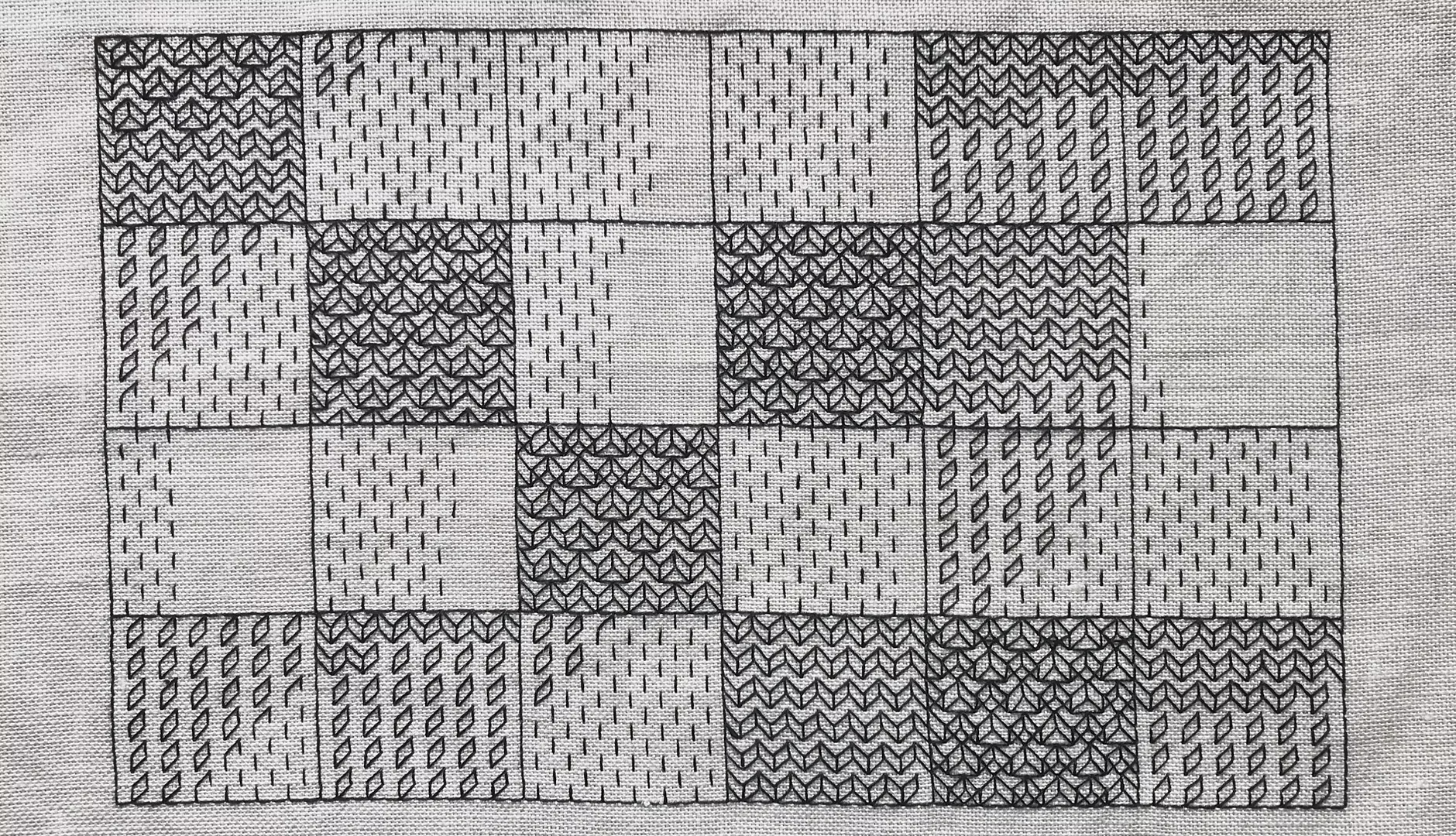
A geometric blackwork pattern, interrupted
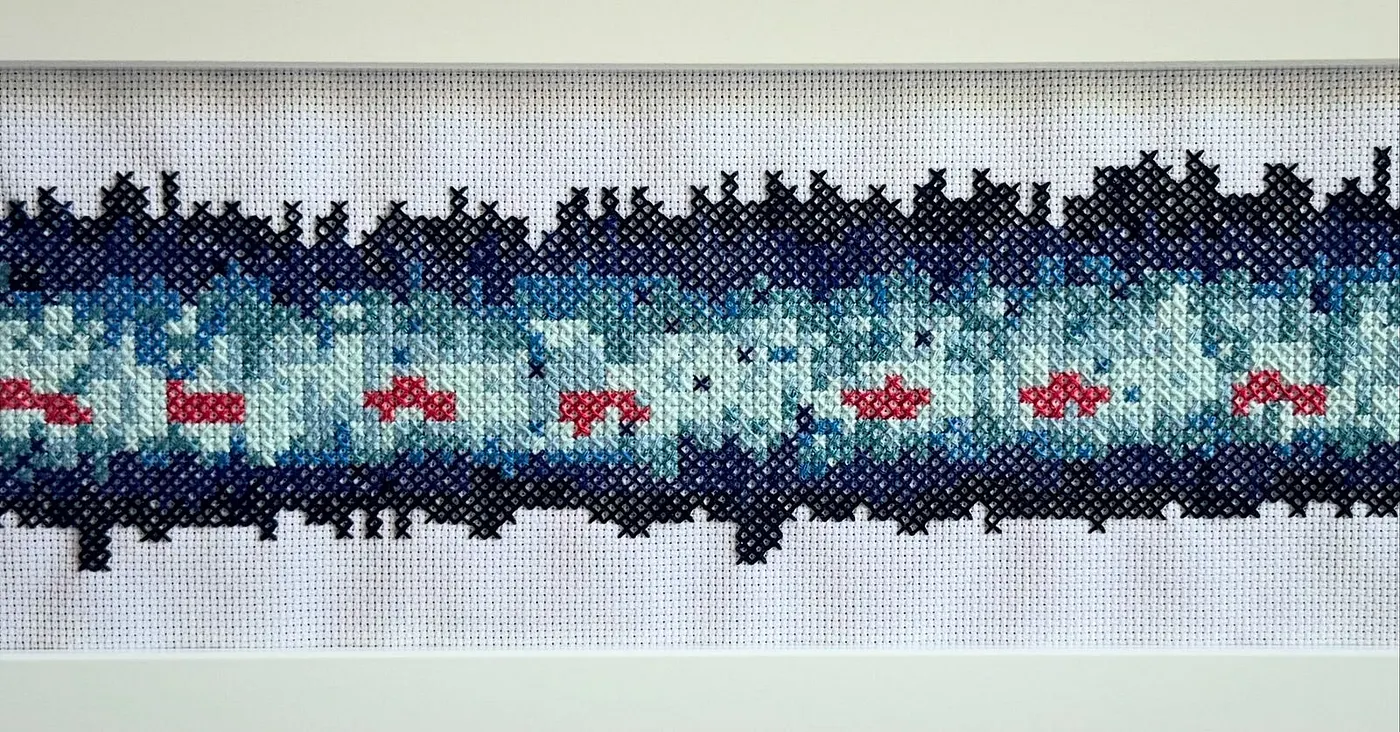
Example 2
embroidery inspired by a spectrogram of a 52-hertz whale
Data Assembly
Moving from data collection to data transformation.
Data Transformation
date
all_social
news_reading
2026-03-15
68
55
2026-03-16
75
93
2026-03-17
32
351
2026-03-18
46
111
2026-03-19
86
103
2026-03-20
37
298
2026-03-21
40
4
Data Transformation 2
all_social
news_reading
total
percent_social
percent_news_reading
68
55
123
0.6
0.4
75
93
168
0.4
0.6
32
351
383
0.1
0.9
46
111
157
0.3
0.7
86
103
189
0.5
0.5
37
298
335
0.1
0.9
40
4
44
0.9
0.1
Data Transformation 3
I wanted to create a design that is 9 shapes across, instead of 10, so I reconfigured my two variables to be a proportion of 9.
(raw number / maximum possible raw number) * 9
Data Transformation, in sum
Transforming raw counts to proportions is a great help
Precision is not required :)
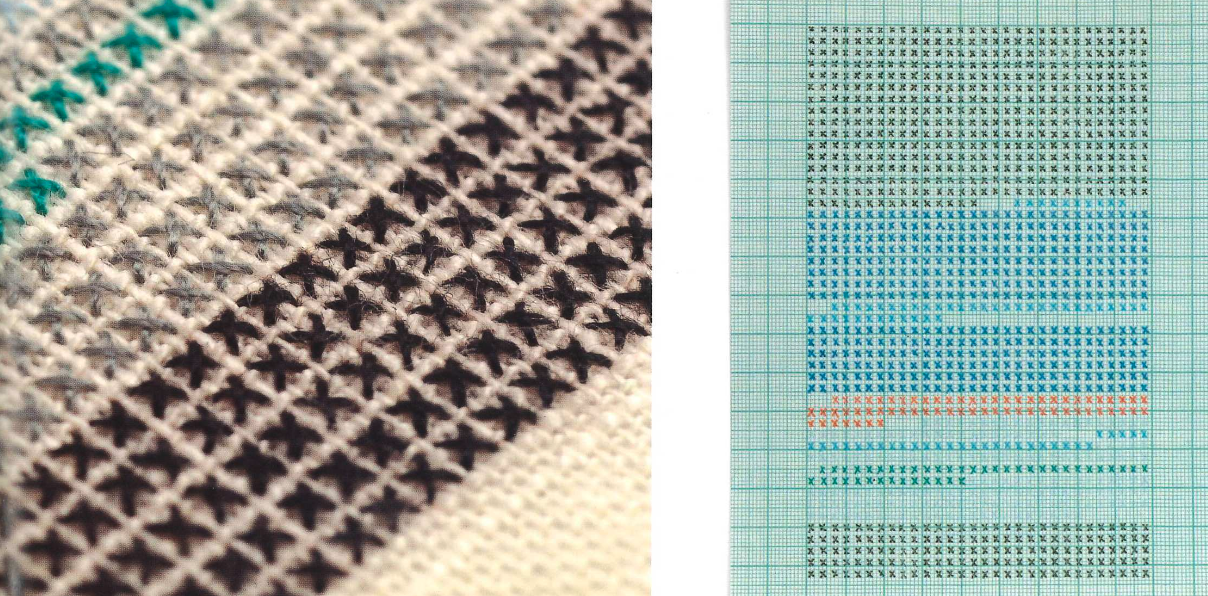
Planning your design
Data Center Workload
Planning your design 2
Jordan Cunliffe, A Day in the Life
Planning your design 3
Pam Lach, Sleep Viz
Planning your design, in sum
Sketch your ideas first with colored pencils
Graph paper helps for precision
It is MUCH easier to follow your plan while embroidering rather than developing that plan and stitching at the same time
Activity 1
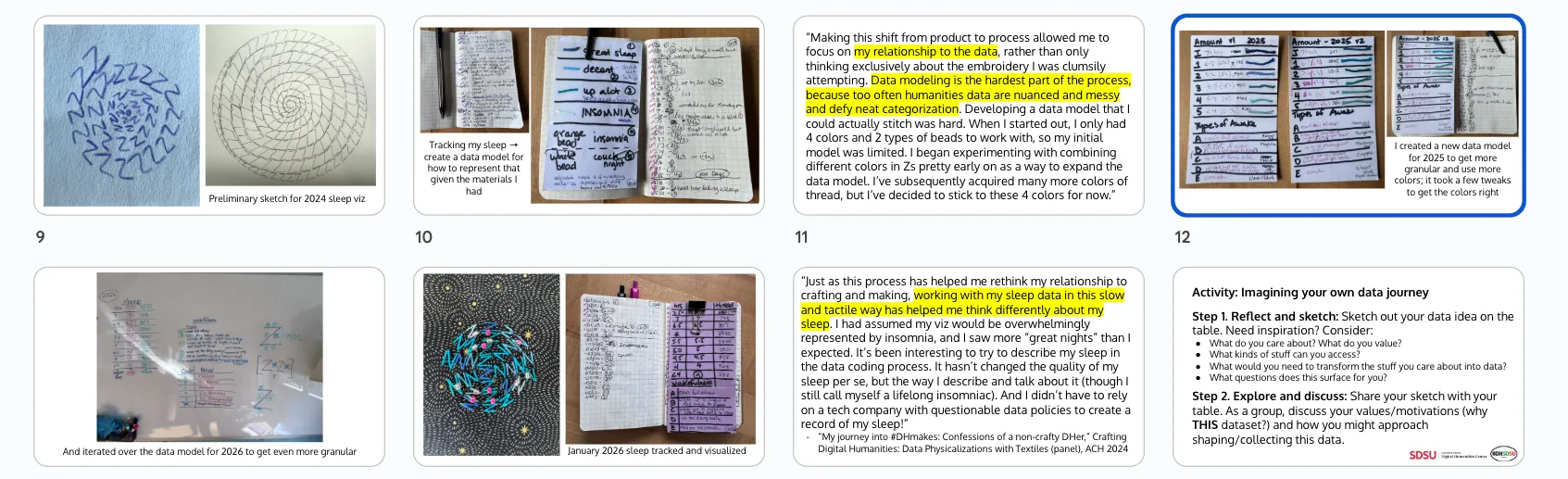
Reflect and sketch: Sketch out your data idea on the provided graph paper. Need inspiration? Consider:
What do you care about? What do you value?
What kinds of stuff can you access?
What would be needed to transform the stuff you care about into (stitchable) data?
What questions does this activity raise for you?
Embroidery basics
Materials
embroidery threads
base cloth
hoops or frames
transfer pencils/pens
scissors
Techniques
drawing directly on the fabric
tracing
transfer paper
Stitches
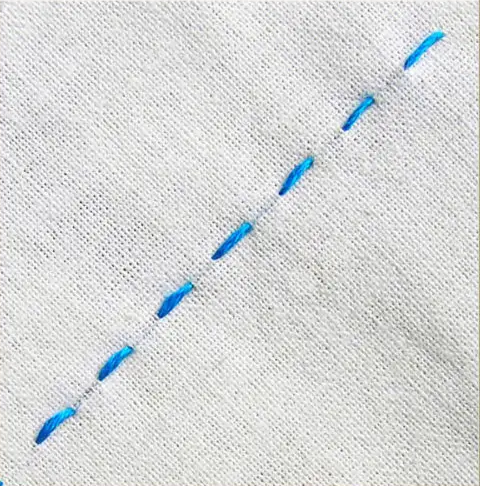
Running stitch
Thread needle and tie a knot at one end. Bring needle up from the back until the knot hits the fabric.
Insert tip of needle one space away from where you came up and “load” the needle by going in and out of fabric to create series of stitches.
Repeat as necessary. Finish by tying a knot underneath—make a loop and pass the needle through the hole, pulling tight.
Khounnoraj, Arounna. 2026. Botanical Embroidery: A Garden of Plant and Flower Designs to Stitch. Abrams.
Smith, Nancy. 2026. Making with Data: Textile and Fiber Arts. Perchance Publishing LLC.
Vogue, Nihon. 2020. Simply Sashiko: Classic Japanese Embroidery Made Easy. Tuttle Publishing.
Project idea
Enter a project into the Big Ten Academic Alliance’s Love Data Week Data Visualization Championship! Students should use the NCAA Women’s Basketball data. Faculty and staff can use any data from their own research or BTAA-related. The winner last year of the faculty/staff entry produced a quilt, so handmade, physical objects are welcomed!
Thanks
That was a lot. Let me know if it would be fun to work on your embroidery collectively in person or online!
Francesca Giannetti
Digital Humanities Librarian
fg162@rutgers.edu